What Can Cause Knee Pain Without Injury
- June 10, 2026
- admin
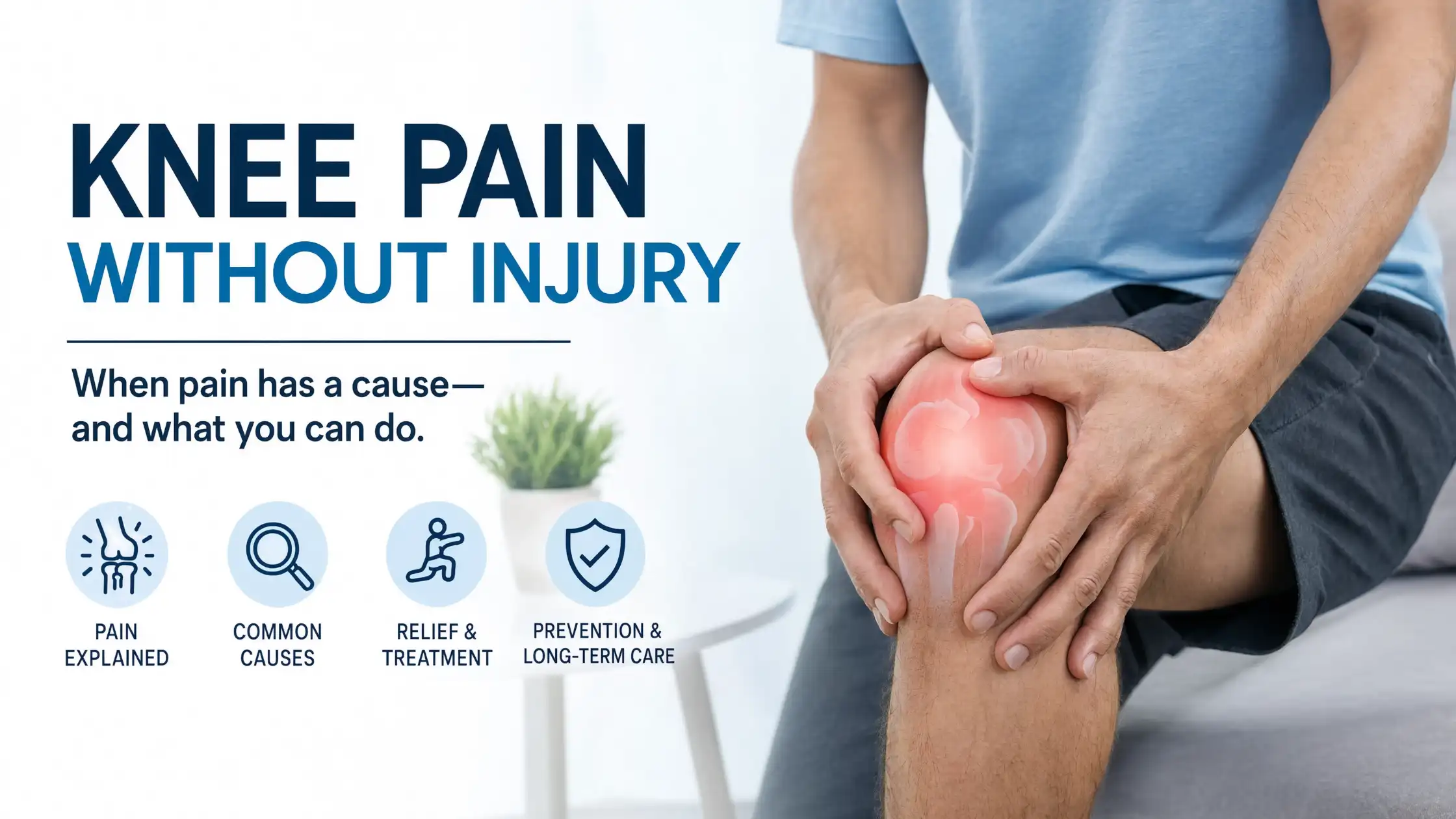
Knee pain is often associated with sports injuries, falls, or accidents. However, many people experience persistent knee discomfort even when they haven’t suffered any obvious injury. If you’ve been wondering what can cause knee pain without injury, you’re not alone. Non-traumatic knee pain is frequently experienced by people across different age groups, including young adults and seniors.
As one of the body’s biggest joints, the knee has a highly complex structure and function. It supports your body weight, enables movement, and absorbs significant stress throughout the day. When pain develops without a specific injury, it may be a sign of an underlying medical condition, age-related changes, overuse, or inflammation that requires proper evaluation and treatment. In this article, we’ll explore the most common causes of knee pain without injury, symptoms to watch for, treatment options, and when you should consult an orthopedic specialist.
Knee Pain Without Injury
Many people assume that knee pain only occurs after a sudden accident or trauma. In reality, knee pain can develop gradually over weeks, months, or even years due to wear and tear, inflammation, mechanical problems, or underlying health conditions.
The location, severity, and duration of the pain can provide important clues about its cause. Some people experience pain while walking, climbing stairs, or standing for long periods, while others may notice stiffness, swelling, or discomfort even during rest.
What Can Cause Knee Pain Without Injury?
Several conditions can cause knee pain even when there has been no direct trauma.
1. Osteoarthritis
Osteoarthritis is one of the most common causes of knee pain in adults, particularly those over the age of 50. It occurs when the protective cartilage cushioning the ends of bones gradually wears away.
Common Symptoms:
- Knee pain during activity
- Morning stiffness
- Reduced range of motion
- Grinding or clicking sensations
- Swelling around the joint
As the cartilage deteriorates, bones may rub against each other, leading to inflammation and discomfort.
2. Rheumatoid Arthritis
Unlike osteoarthritis, rheumatoid arthritis is an autoimmune disease in which the immune system attacks the lining of the joints.
Common Symptoms:
- Pain in both knees
- Joint swelling
- Warmth around the knee
- Morning stiffness lasting longer than 30 minutes
- Fatigue and general weakness
Early diagnosis is important to prevent long-term joint damage.
You might also like to read: Osteoarthritis vs Rheumatoid Arthritis
3. Patellofemoral Pain Syndrome
Referred to as “runner’s knee,” it typically causes discomfort in the area surrounding or behind the kneecap.
Risk Factors:
- Muscle imbalances
- Poor kneecap alignment
- Repetitive knee movements
- Prolonged sitting
Symptoms:
- Pain when climbing stairs
- Discomfort after sitting for long periods
- Pain during squatting
4. Tendinitis
Tendinitis occurs when tendons around the knee become irritated or inflamed due to repetitive stress.
Common Causes:
- Frequent walking or running
- Repeated kneeling
- Excessive physical activity
Symptoms:
- Localized pain
- Tenderness
- Pain that worsens with movement
Patellar tendinitis is particularly common among active individuals.
5. Bursitis
Small fluid-filled sacs called bursae help reduce friction around the knee joint. When these sacs become inflamed, bursitis develops.
Symptoms:
- Swelling
- Tenderness
- Warmth around the knee
- Pain during movement
Jobs that require frequent kneeling may increase the likelihood of developing knee bursitis.
6. Meniscus Degeneration
While meniscus tears are often linked to injuries, age-related degeneration can also damage the meniscus over time.
Symptoms:
-
Knee pain
-
Stiffness
-
Occasional locking
-
Difficulty bending the knee
Degenerative meniscus changes are commonly seen in middle-aged and older adults.
7. Gout
Gout is a painful inflammatory joint condition caused by the deposition of uric acid crystals in and around the joints.
Symptoms:
-
Sudden severe knee pain
-
Swelling
-
Redness
-
Warmth around the joint
Although gout frequently affects the big toe, it can also involve the knee.
8. Obesity and Excess Weight
Carrying extra body weight places significant stress on the knees. Every step increases the load transmitted through the knee joint.
Effects on the Knee:
-
Accelerated cartilage wear
-
Increased inflammation
-
Greater risk of osteoarthritis
-
Chronic knee pain
Weight management often plays a crucial role in reducing symptoms.
9. Iliotibial Band Syndrome
The iliotibial (IT) band is a strong, fibrous tissue that extends along the outer side of the thigh. Tightness or irritation can lead to knee pain.
Symptoms:
-
Pain on the outer side of the knee
-
Discomfort during walking or running
-
Tenderness along the IT band
10. Referred Pain from Other Conditions
Sometimes the knee itself isn’t the source of the problem.
Conditions affecting the following areas may cause pain that radiates to the knee:
-
Hip joint disorders
-
Lower back problems
-
Nerve compression
A thorough orthopedic evaluation can help identify the true source of pain.
Risk Factors for Knee Pain Without Injury
Certain factors increase the likelihood of developing knee pain without a specific injury:
- Age: Cartilage naturally wears down over time, making older adults more susceptible to joint pain.
- Sedentary Lifestyle: Weak muscles around the knee provide less support to the joint.
- Overuse: Repeated activities can gradually stress the knee structures.
- Poor Posture and Alignment: Abnormal walking patterns can place uneven pressure on the knee.
- Previous Joint Problems: Earlier knee conditions may contribute to future pain episodes.
Symptoms That Should Not Be Ignored
While mild knee discomfort may improve with rest, some symptoms require medical attention.
Seek evaluation if you experience:
-
Persistent knee pain lasting several weeks
-
Significant swelling
-
Knee instability or giving way
-
Difficulty walking
-
Reduced range of motion
-
Fever with joint pain
-
Severe pain during daily activities
Identifying the condition early may help prevent progressive damage to the joints.
How Is Knee Pain Without Injury Diagnosed?
An orthopedic specialist will typically perform:
Medical History Review
Understanding symptoms, lifestyle factors, and medical conditions.
Physical Examination
Assessing joint movement, strength, swelling, and stability.
Imaging Tests
-
X-rays
-
MRI scans
-
Ultrasound when necessary
Laboratory Tests
Blood tests may help identify inflammatory or autoimmune conditions.
Accurate diagnosis is essential because treatment varies depending on the underlying cause.
Treatment Options for Knee Pain Without Injury
Activity Modification
Reducing activities that aggravate symptoms can help relieve stress on the joint.
Targeted exercises can:
-
Strengthen surrounding muscles
-
Improve flexibility
-
Enhance joint stability
Even modest weight loss can significantly reduce pressure on the knees.
Medications
Depending on the diagnosis, treatment may include:
-
Anti-inflammatory medications
-
Pain relievers
-
Disease-modifying medications for arthritis
Injections
Certain patients may benefit from:
-
Corticosteroid injections
-
Hyaluronic acid injections
-
Regenerative therapies when appropriate
Surgical Intervention
In severe cases involving advanced joint damage, surgical options may be recommended.
Preventing Knee Pain Without Injury
While not all causes are preventable, the following measures can help maintain knee health:
-
Maintain a healthy body weight
-
Exercise regularly
-
Strengthen leg muscles
-
Stretch before and after physical activity
-
Wear supportive footwear
-
Avoid prolonged sitting
-
Practice proper posture
Consistent joint care can significantly reduce the risk of chronic knee problems.
Why Choose Garden PMR Hospital for Knee Pain Treatment?
If you’re experiencing persistent knee discomfort and wondering what can cause knee pain without injury, seeking expert evaluation is essential.
Being the best PMR Hospital in India, Garden PMR Hospital offers comprehensive orthopedic care for patients experiencing knee pain, arthritis, sports-related conditions, and other musculoskeletal disorders. The hospital combines experienced PMR specialists, rehabilitation services, and personalized treatment plans to identify the root cause of knee pain and provide effective management.
Whether your symptoms are due to arthritis, tendon disorders, inflammation, or age-related joint changes, timely consultation with experts can help restore mobility and improve quality of life.
Final Words
Many people are surprised to learn that knee pain can occur even without a fall, accident, or sports injury. Understanding what can cause knee pain without injury is the first step toward finding the right treatment. Conditions such as osteoarthritis, rheumatoid arthritis, tendinitis, bursitis, obesity, and referred pain are among the most common causes.
Ignoring persistent knee pain may allow underlying conditions to worsen over time. Early diagnosis, proper treatment, and lifestyle modifications can help relieve symptoms, improve joint function, and prevent long-term complications.
If your knee pain persists, consulting an orthopedic specialist can help determine the underlying cause and guide you toward the most effective treatment plan.
FAQs
Both conditions are serious and progressive. Alzheimer’s primarily affects memory and cognitive function, while Parkinson’s mainly affects movement. The impact varies depending on the individual and stage of the disease.
Yes, although uncommon, some individuals may develop symptoms of both conditions, especially in advanced age.
No, not all Parkinson’s patients develop dementia. However, cognitive decline can occur in later stages for some individuals.
Memory loss is not usually an early symptom of Parkinson’s but may appear in advanced stages.
Doctors use a combination of medical history, physical examination, neurological tests, and imaging studies to diagnose these conditions.