


Stroke rehab program
What is Integrated PMR?
Garden PMR Hospital, India’s leading integrated Physical Medicine & Rehabilitation hospital, revolutionizes recovery through a unique, multidisciplinary approach. Our Integrated PMR Protocol seamlessly combines modern PMR, Ayurveda, and the latest therapeutic advancements to accelerate recovery.
With a 99% success rate, our expert team specializes in precise diagnoses, ensuring each patient receives a personalized, evidence-based treatment plan that maximizes recovery potential. By uniting the strengths of diverse medical disciplines, we provide a comprehensive and targeted approach that eliminates treatment gaps and optimizes outcomes.
Many patients struggle with misdiagnoses and fragmented treatments, delaying their recovery. At Garden PMR Hospital, we bridge these gaps by integrating modern medicine, Ayurveda, physiotherapy, prolotherapy, and specialized rehabilitation techniques under one roof. Our highly experienced professionals work in perfect synergy, focusing on a single goal—rapid and sustainable recovery.
This world-class integrative treatment model not only enhances healing but also helps patients avoid unnecessary surgeries, restoring mobility, independence, and quality of life with unparalleled expertise and compassionate care.
Our Integrated Departments
At Garden PMR, our departments do not work in isolation. They function as a single, coordinated team to deliver comprehensive neuro-ortho rehabilitation.
Physiatrist
Our Physiatrists are medical doctors who lead the rehabilitation team, specializing in creating personalized, evidence-based recovery roadmaps for every patient.
Physiotherapist
Experts in restoring movement and physical function through a combination of manual techniques, therapeutic exercises, and advanced robotic technology.
Occupational Therapy
Focuses on helping patients regain the skills needed for daily living, from basic self-care to complex tasks, restoring dignity through functional independence.
Speech & Swallowing
Specialized therapy to restore communication skills and safe swallowing functions, utilizing the latest medical equipment to improve quality of life.
Modern Medicine
Incorporates advanced diagnostics and pharmacological treatments to manage underlying medical conditions and optimize the body for rehabilitation.
Ayurveda
Integrates time-tested traditional healing to manage inflammation, reduce pain, and accelerate the body's natural recovery processes.
Prolotherapy
Utilizes non-surgical regenerative injections, such as PRP and Dextrose, to stimulate natural healing in injured tissues and chronic joint conditions.
Psychology
Provides vital emotional and cognitive support, helping patients and families build the mental resilience required for a successful long-term recovery.
Orthotist & Prosthetist
Specialists who design and fit custom braces and artificial limbs, ensuring every patient has the assistive tools needed to move with confidence.
TYPES OF STROKE
Ischemic stroke
Occurs when a blood clot or fatty plaque blocks an artery supplying the brain, reducing or stopping blood flow. Ischemic strokes are the most common type.
Haemorrhagic stroke
Occurs when a blood vessel in the brain ruptures and bleeds. Bleeding prevents nearby brain tissue from getting oxygen. High blood pressure is a common cause because it can weaken vessel walls.
Transient Ischemic Attack (TIA) — “warning stroke”
A TIA causes stroke-like symptoms that last a short time and usually do not cause permanent damage. However, a TIA is a strong warning sign of an increased risk of a full stroke and needs prompt medical evaluation.
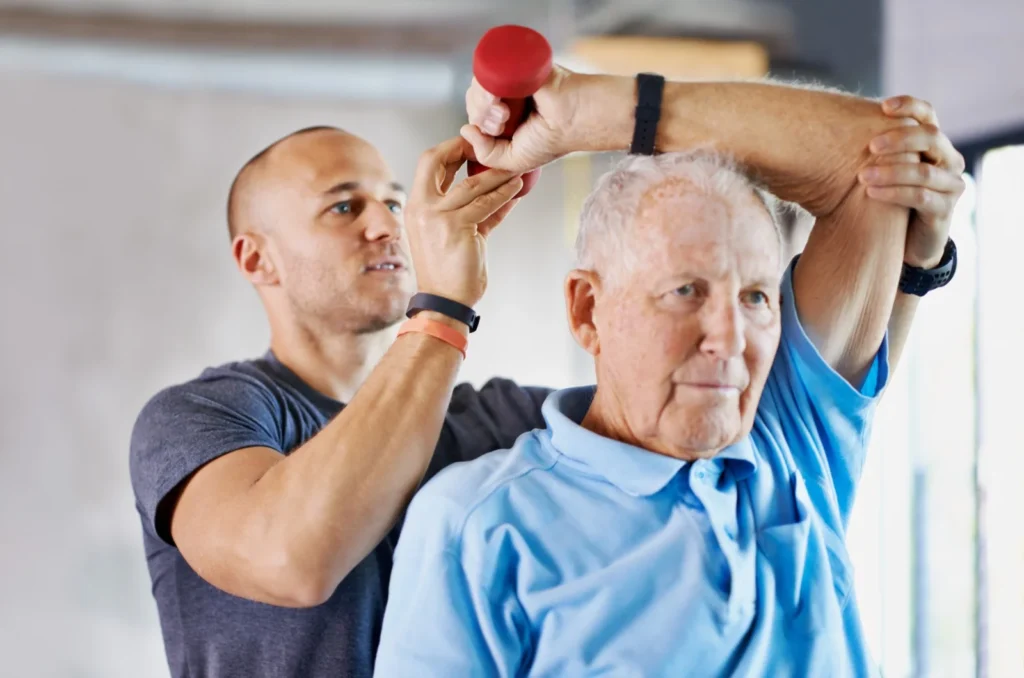
OCCUPATIONAL THERAPY IN STROKE REHABILITATION
Occupational Therapy (OT) plays a vital role in helping stroke survivors regain independence, improve functional abilities, and reintegrate into their daily lives. Occupational therapy focuses not only on restoring lost skills but also on teaching adaptive techniques to overcome limitations, making it an essential part of a comprehensive stroke rehabilitation program.
PSYCHOLOGY IN STROKE REHABILITATION
Psychology plays a vital role in stroke rehabilitation by addressing the emotional, cognitive, and behavioural challenges patients face. Psychological care begins with thorough screening and continues through active listening, supporting adjustment to new limitations, and exploring the personal impact of the stroke. It involves providing clear information, assisting in goal setting, and identifying any psychological difficulties that may arise during recovery. To enhance coping and improve outcomes, interventions such as problem-solving therapy, motivational interviewing, solution-focused counselling, and behavioural activation are applied, helping patients stay motivated, adapt effectively, and maintain emotional well-being throughout their rehabilitation journey.