Difference Between Alzheimer’s & Parkinson’s
- May 21, 2026
- admin
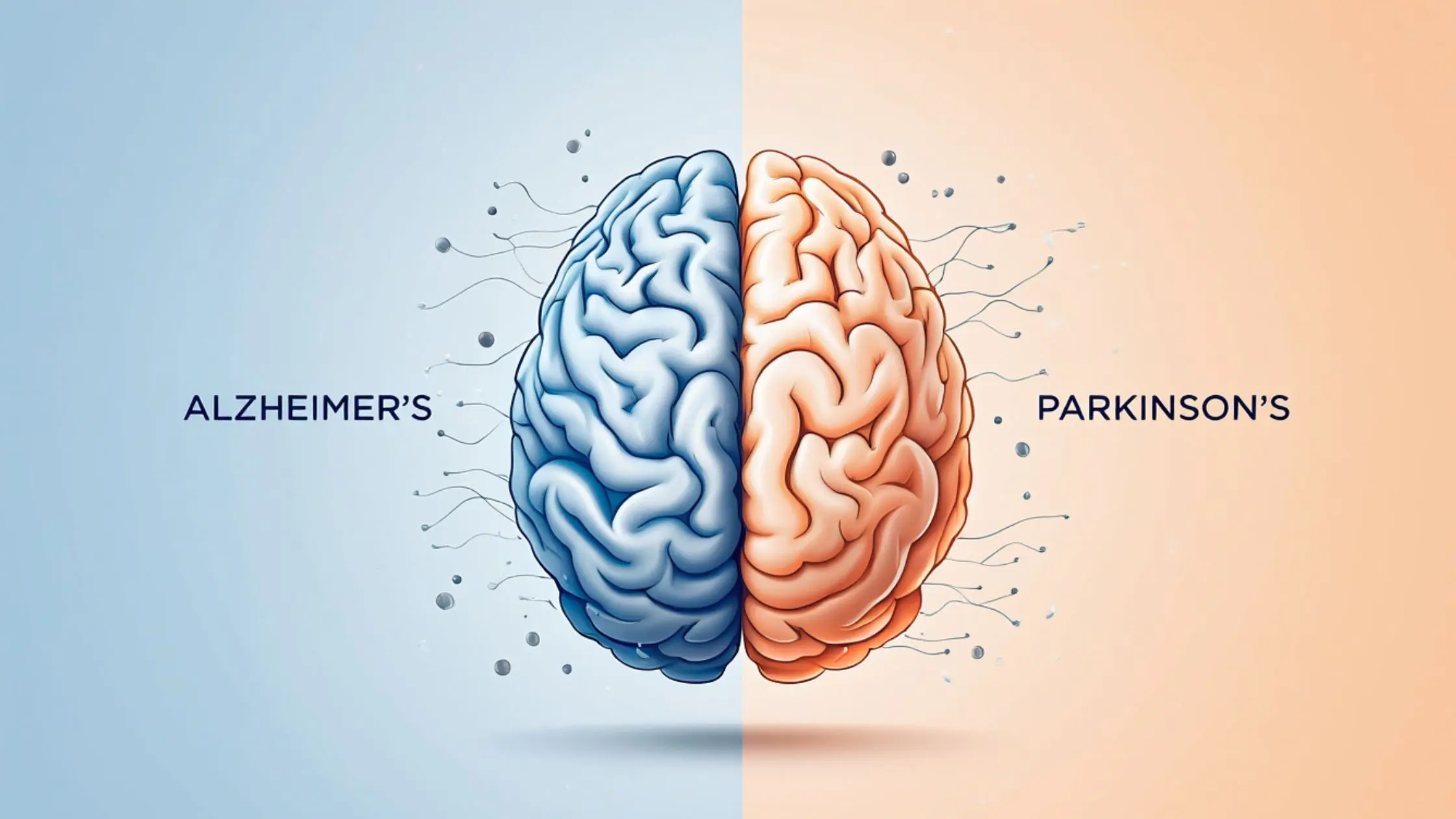
It’s very common for people to confuse Alzheimer’s disease and Parkinson’s disease,especially because both affect the brain and tend to occur in older adults. Families often ask the same question when a loved one starts showing symptoms: what is the difference between Alzheimer’s and Parkinson’s?
While both are progressive neurological disorders, they affect the brain in very different ways. Alzheimer’s primarily impacts memory, thinking, and behavior, whereas Parkinson’s mainly affects movement and motor control. Over time, however, there can be some overlap, which adds to the confusion.
Understanding the difference between Alzheimer’s and Parkinson’s is important not just for awareness, but also for early diagnosis, proper treatment, and better long-term care. Each condition follows its own progression pattern and requires a tailored approach to management.
In this guide, we’ll break down the key differences in a clear and practical way, covering symptoms, causes, progression, and treatment, so you can better understand these two conditions.
What Is Alzheimer’s Disease?
Alzheimer’s disease is a progressive brain disorder that slowly destroys memory and thinking abilities. It is the most common cause of dementia.
The condition develops when abnormal proteins build up in the brain, forming plaques and tangles that damage nerve cells. Over time, this leads to a decline in cognitive function.
Common Symptoms of Alzheimer’s Disease
Alzheimer’s symptoms usually start subtly and worsen gradually:
- Memory loss, especially recent events
- Difficulty finding words or following conversations
- Confusion about time or place
- Trouble completing familiar tasks
- Poor judgment and decision-making
- Personality or behavior changes
In the early stages, symptoms may seem like simple forgetfulness. As the disease progresses, patients may struggle with daily activities and eventually require full-time care.
What Is Parkinson’s Disease?
Parkinson’s disease is primarily a movement disorder caused by the loss of dopamine-producing cells in the brain.
Dopamine plays a crucial role in controlling movement. When its levels drop, the body begins to show noticeable motor symptoms.
Common Symptoms of Parkinson’s Disease
- Tremors, especially in the hands
- Slowed movement (bradykinesia)
- Muscle stiffness
- Balance and coordination issues
- Changes in posture and walking pattern
Unlike Alzheimer’s, Parkinson’s symptoms usually begin with physical changes. However, in later stages, some patients may develop cognitive issues, including Parkinson’s-related dementia.
Difference Between Alzheimer’s and Parkinson’s
To clearly understand the difference between Alzheimer’s and Parkinson’s, it helps to compare them across key aspects.
1. Primary Area Affected
Alzheimer’s mainly affects memory and cognitive function, while Parkinson’s primarily impacts movement and motor control.
This is often the first and most noticeable difference between the two conditions.
2. Early Symptoms
In Alzheimer’s, early signs typically include memory loss and confusion.
In Parkinson’s, early symptoms are more physical, such as tremors, stiffness, or slower movements.
3. Progression of the Disease
Alzheimer’s disease gradually worsens cognitive decline, affecting thinking, behavior, and daily functioning.
Parkinson’s disease progresses by worsening movement-related symptoms. Cognitive decline may appear later in some cases, but is not always present.
4. Cause and Brain Changes
Alzheimer’s is associated with the buildup of amyloid plaques and tau tangles in the brain.
Parkinson’s is caused by the degeneration of dopamine-producing neurons in a specific part of the brain.
5. Impact on Daily Life
Alzheimer’s patients often struggle with memory, communication, and decision-making.
Parkinson’s patients may find it difficult to perform physical tasks like walking, writing, or maintaining balance.
6. Dementia and Cognitive Decline
Dementia is a core feature of Alzheimer’s disease.
In Parkinson’s, dementia can develop in later stages, but not all patients experience it.
This distinction is often described as dementia vs Parkinson’s, although they can overlap in advanced cases.
Alzheimer’s vs Parkinson’s
Although these conditions are different, there are situations where they may overlap.
For example:
- Some Parkinson’s patients may develop cognitive decline over time
- Both conditions can affect mood and mental health
- Sleep disturbances are common in both disorders
This overlap can sometimes make diagnosis challenging, especially in older adults. That’s why a proper neurological evaluation is essential.
Early Signs to Watch For
Recognizing early symptoms can make a significant difference in treatment and quality of life.
Early Signs of Alzheimer’s
- Frequent memory lapses
- Difficulty remembering recent conversations
- Getting lost in familiar places
- Trouble organizing tasks
Early Signs of Parkinson’s
- Slight tremors in hands or fingers
- Reduced facial expressions
- Slower movements
- Changes in handwriting
If these symptoms persist, seeking medical advice early can help in timely diagnosis and management.
Treatment for Alzheimer’s and Parkinson’s
While there is currently no cure for either condition, treatments can help manage symptoms and improve quality of life.
Alzheimer’s Treatment
- Medications to support memory and cognitive function
- Cognitive therapy
- Lifestyle support and structured routines
Parkinson’s Treatment
- Medications to increase dopamine levels
- Physiotherapy and exercise programs
- Occupational and speech therapy
Early intervention can slow symptom progression and help patients maintain independence longer.
What Families Should Know!
Both Alzheimer’s and Parkinson’s require long-term care and emotional support.
Key Care Considerations
- Creating a safe and supportive environment
- Maintaining a consistent routine
- Encouraging physical and mental activity
- Providing emotional reassurance
Caregivers play a crucial role in improving the patient’s quality of life.
Neurological Care at Garden PMR Hospital
Managing neurological conditions like Alzheimer’s and Parkinson’s requires a comprehensive and compassionate approach. Garden PMR Hospital offers specialized care for patients with neurodegenerative disorders.
The hospital focuses on early diagnosis, symptom management, and long-term support tailored to each patient’s condition.
Why Choose Garden PMR Hospital?
Garden PMR Hospital provides:
- Experienced neurologists and rehabilitation specialists
- Personalized treatment plans
- Physiotherapy and rehabilitation programs
- Ongoing patient and caregiver support
For patients and families trying to understand the difference between Alzheimer’s and Parkinson’s, expert consultation at Garden PMR Hospital can provide clarity, accurate diagnosis, and the right treatment pathway.
FAQs
Both conditions are serious and progressive. Alzheimer’s primarily affects memory and cognitive function, while Parkinson’s mainly affects movement. The impact varies depending on the individual and stage of the disease.
Yes, although uncommon, some individuals may develop symptoms of both conditions, especially in advanced age.
No, not all Parkinson’s patients develop dementia. However, cognitive decline can occur in later stages for some individuals.
Memory loss is not usually an early symptom of Parkinson’s but may appear in advanced stages.
Doctors use a combination of medical history, physical examination, neurological tests, and imaging studies to diagnose these conditions.