Foot Drop After Stroke
- September 14, 2026
- admin
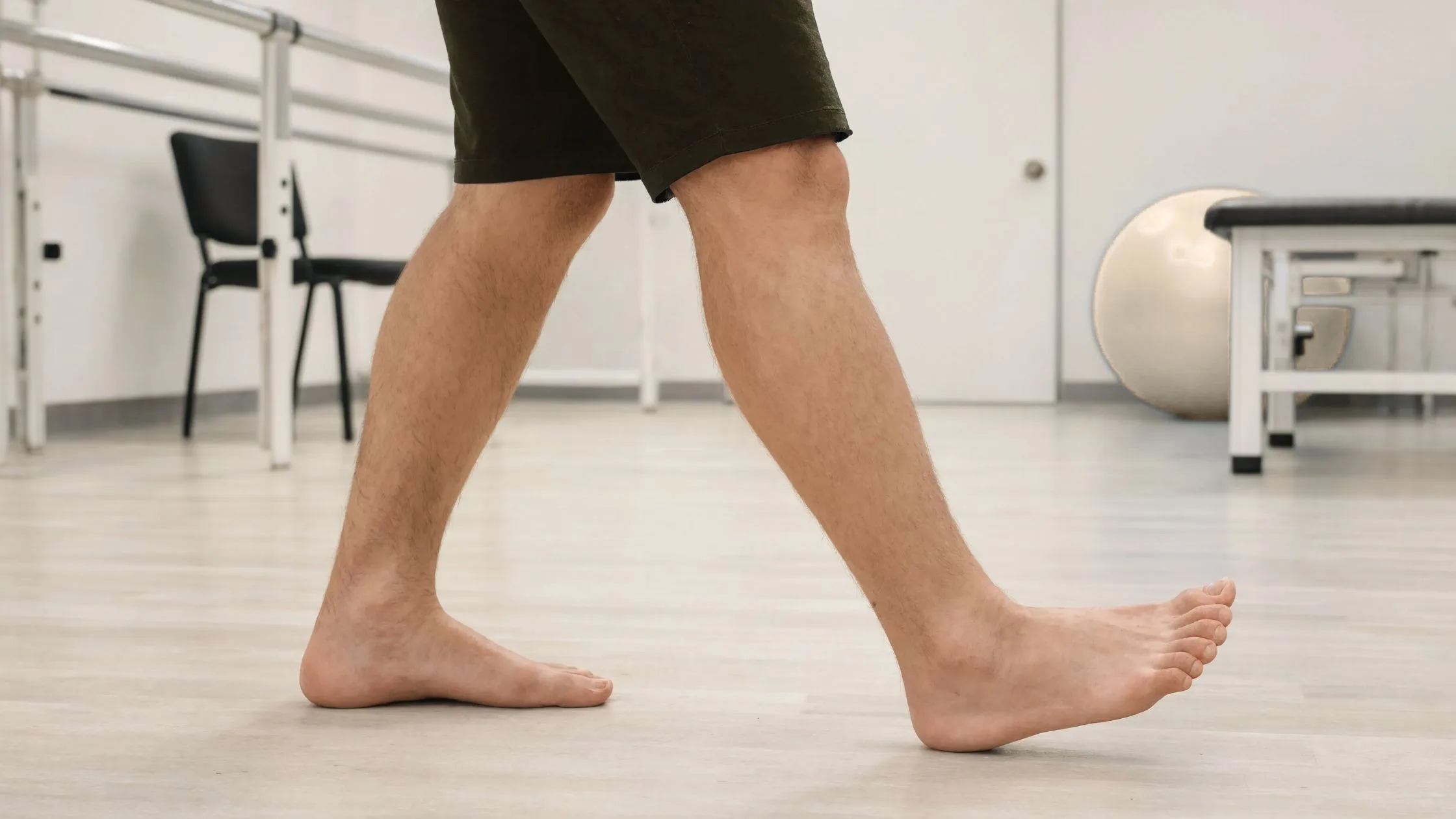
Walking may seem like one of the simplest things the body does, until a stroke changes the way the legs and feet move. For some stroke survivors, taking a step becomes difficult because the front of the foot does not lift properly. The toes may drag along the floor, the ankle may feel weak or unstable, or the person may need to lift the knee unusually high just to clear the ground.
This condition is known as foot drop after stroke. It is a common movement problem that can affect walking speed, balance, confidence and independence. Foot drop can also increase the risk of tripping and falling, particularly when walking on uneven surfaces or changing direction.
The good news is that foot drop does not necessarily mean that a person will always have difficulty walking. With appropriate assessment and a structured rehabilitation programme, many stroke survivors can improve their walking pattern and functional mobility. Treatment may include physiotherapy, gait training, strengthening and stretching exercises, balance training, ankle-foot orthoses (AFOs), functional electrical stimulation and other rehabilitation approaches depending on the individual’s condition.
What Is Foot Drop After Stroke?
Foot drop after stroke refers to difficulty lifting the front part of the foot upward while walking. The movement is called ankle dorsiflexion, and it is important because the foot needs to clear the ground as the leg swings forward.
After a stroke, weakness, paralysis, altered muscle tone or impaired coordination can affect the muscles responsible for this movement. As a result, the toes may point downward while the leg is moving forward.
A person with foot drop may notice:
- The toes dragging or catching on the floor
- Difficulty lifting the front of the foot
- An unstable ankle while standing or walking
- Frequent tripping or near-falls
- A need to lift the knee higher than usual
- Difficulty walking on uneven surfaces
- Slower walking speed
- Increased effort or fatigue while walking
- Changes in the normal walking pattern
The problem may be particularly noticeable during the swing phase of gait, when the affected leg moves forward.
Foot drop is not simply a problem with the foot itself. In stroke survivors, it can be part of a wider neurological movement impairment involving the muscles, nerves, coordination and control of the affected side.
Why Does Foot Drop Happen After a Stroke?
A stroke damages part of the brain that controls movement and other body functions. Depending on the location and extent of the brain injury, a person may develop weakness or paralysis on one side of the body, known as hemiparesis or hemiplegia.
When the areas controlling the lower limb are affected, the muscles responsible for lifting the foot may not receive normal signals from the brain.
Several factors can contribute to foot drop after stroke.
1. Weakness of the ankle muscles
The muscles that pull the foot upward may become weak after a stroke. This makes it difficult to lift the toes and front of the foot while walking.
2. Changes in muscle tone
Some stroke survivors develop spasticity, where certain muscles become unusually stiff or tight. Increased muscle tone around the calf and ankle can interfere with normal ankle movement.
3. Reduced motor control
Even when a muscle has some strength, the brain may have difficulty controlling when and how strongly it contracts. This can make walking movements less coordinated.
4. Poor balance and coordination
Stroke can affect balance and proprioception—the body’s ability to sense the position and movement of its limbs. This can make walking less stable and may cause a person to compensate for the affected foot.
5. Abnormal gait patterns
A stroke survivor may develop compensatory walking patterns to prevent the toes from catching the ground. One example is a steppage gait, where the person lifts the hip and knee higher than usual. Another is circumduction gait, where the affected leg swings outward in an arc.
These compensations may help the person move the leg forward, but they can also make walking less efficient and increase physical effort.
What Does Foot Drop Look Like When Walking?
One of the easiest ways to recognise foot drop is to observe how the affected leg moves during walking.
Normally, the front of the foot should clear the ground as the leg swings forward. With foot drop, the toes may remain pointed downward, causing them to catch on the floor.
A person may then compensate by:
- Raising the knee higher
- Swinging the leg outward
- Leaning the body to one side
- Taking shorter steps
- Walking more slowly
- Holding onto furniture or another person for support
These changes can make walking look unusual, but they are often the body’s attempt to compensate for reduced foot clearance.
Importantly, not every abnormal walking pattern after stroke is caused by foot drop. A proper assessment by a rehabilitation professional is needed to identify the underlying problem.
What Are the Symptoms of Foot Drop After Stroke?
Symptoms can vary considerably from one person to another. Some people may have mild weakness and only notice difficulty when walking quickly, while others may have significant difficulty lifting the foot.
Common symptoms include:
Difficulty lifting the foot
The most characteristic sign is difficulty raising the front of the foot toward the shin.
Toe dragging
The toes may scrape or catch on the floor, especially when walking.
Frequent tripping
Reduced foot clearance can make it easier to catch the toes on carpets, steps, uneven surfaces or other obstacles.
Changes in walking pattern
A person may develop a high-stepping or outward-swinging gait to compensate for the lack of ankle movement.
Ankle instability
The ankle may feel weak or unstable during standing and walking.
Reduced walking speed
Foot drop can make walking slower and more physically demanding.
Fatigue while walking
Because compensatory movements require additional effort, some people may become tired after relatively short distances.
Fear of falling
Repeated trips or near-falls can reduce confidence and cause a person to become hesitant about walking independently.
These problems can affect much more than mobility. Difficulty walking can interfere with everyday activities, social participation and overall independence.
How Is Foot Drop Diagnosed After a Stroke?
There is no single test that determines whether a stroke survivor has foot drop. A rehabilitation specialist generally looks at the person’s overall movement and walking ability.
Assessment may include:
- Medical and stroke history
- Muscle strength testing
- Range-of-motion assessment
- Muscle tone and spasticity assessment
- Ankle movement
- Balance assessment
- Walking and gait analysis
- Functional mobility assessment
- Observation of the affected and unaffected sides
- Assessment of assistive devices or footwear
The rehabilitation team may also look at whether the problem is primarily due to weakness, increased muscle tone, poor coordination, restricted ankle movement or a combination of factors.
This distinction matters because treatment should address the reason for the abnormal gait rather than simply trying to change the appearance of the walking pattern.
Can Foot Drop Improve After a Stroke?
Yes, improvement is possible, but recovery is different for every stroke survivor.
The extent of recovery depends on factors such as:
- The location and severity of the stroke
- The extent of weakness
- Muscle tone and spasticity
- Overall physical health
- Balance and coordination
- How soon rehabilitation begins
- Consistency with therapy
- The person’s functional goals
- Other complications following the stroke
Stroke rehabilitation is not limited to the first few weeks. People can continue working on mobility and function over a much longer period, although the pace of progress can vary.
Current stroke rehabilitation guidance emphasises coordinated, multidisciplinary rehabilitation and sufficient task-specific practice, while recognising that the ideal treatment programme differs between individuals.
Treatment for Foot Drop After Stroke
There is no single treatment that works for everyone with foot drop after stroke. A rehabilitation specialist may combine several approaches depending on the individual’s strength, muscle tone, walking pattern and functional goals.
1. Physiotherapy
Physiotherapy is one of the most important components of post-stroke rehabilitation.
A physiotherapist may work on:
- Lower-limb strength
- Ankle mobility
- Muscle control
- Balance
- Weight shifting
- Walking technique
- Functional movements
- Transfers
- Stair climbing
- Endurance
The objective is not simply to make the foot stronger. Therapy aims to improve the person’s overall ability to move safely and efficiently.
2. Gait Training
Gait training after stroke focuses specifically on improving walking.
Depending on the individual’s ability, gait training may involve:
- Practising proper foot placement
- Improving step length
- Working on weight transfer
- Repeated walking practice
- Improving balance during walking
- Training with a cane or walker when required
- Practising changes in direction
- Stair training
- Gradually increasing walking distance
Garden PMR Hospital’s stroke rehabilitation programme includes progressive mobility training from bed mobility and sitting balance through standing, walking, stair climbing and functional activities.
3. Strengthening Exercises
Weakness in the affected leg can contribute to poor walking ability.
A rehabilitation professional may prescribe exercises designed to improve:
- Ankle dorsiflexor strength
- Leg strength
- Hip strength
- Knee control
- Core stability
- Functional lower-limb strength
Exercises should be selected according to the person’s current ability. Trying to perform difficult exercises without appropriate supervision may increase the risk of falls or injury.
4. Stretching and Range-of-Motion Exercises
Some stroke survivors develop tightness in the calf muscles or other lower-limb muscles.
Stretching and range-of-motion exercises may be incorporated to help maintain joint mobility and reduce limitations that interfere with walking.
However, stretching alone does not correct every type of foot drop. The rehabilitation programme should address the underlying neurological and movement impairments.
5. Balance Training
Balance is particularly important when treating foot drop after stroke because reduced foot control can make standing and walking less stable.
Balance exercises may include:
- Supported standing
- Weight-shifting exercises
- Reaching activities
- Sit-to-stand practice
- Stepping exercises
- Turning practice
- Walking on different surfaces
As balance improves, the therapist can gradually increase the difficulty while maintaining safety.
6. Ankle-Foot Orthosis (AFO)
An ankle-foot orthosis, commonly called an AFO, is a brace designed to support the ankle and foot.
For some stroke survivors, an AFO can help maintain the foot in a more functional position during walking and improve foot clearance.
Research has found that AFOs can improve walking speed and several gait measures in people with stroke, although the most suitable type of orthosis depends on the individual’s gait pattern and clinical needs.
An AFO should ideally be recommended and fitted based on an individual assessment rather than purchased simply because someone else with stroke uses one.
7. Functional Electrical Stimulation (FES)
Functional electrical stimulation for foot drop uses small electrical impulses to stimulate nerves and muscles involved in lifting the foot during walking.
For selected stroke survivors, FES may help improve foot clearance and walking performance.
Evidence comparing FES and AFOs suggests that both can improve walking speed in people with post-stroke foot drop, although the best option depends on the person’s individual presentation and rehabilitation goals.
FES is not appropriate for everyone, so assessment by an appropriately trained healthcare professional is important.
8. Assistive Devices
A cane, walker or another mobility aid may sometimes be recommended to improve safety while walking.
An assistive device does not mean that recovery has failed. In many cases, it provides the support needed to practise walking safely while strength, balance and motor control are being developed.
The correct device and level of assistance should be determined by a rehabilitation professional.
Exercises for Foot Drop After Stroke
Exercises can be an important part of rehabilitation, but there is no universal exercise routine for every stroke survivor.
Depending on the person’s abilities, a therapist may include exercises such as:
Ankle dorsiflexion practice
The patient attempts to lift the front of the foot upward while keeping the heel supported.
Seated foot lifts
While sitting safely, the person practises raising the toes and front of the foot.
Heel raises
If appropriate and safe, controlled heel raises can help develop lower-leg strength.
Sit-to-stand exercises
Repeated sit-to-stand practice can strengthen the lower limbs while working on functional movement.
Supported stepping
Stepping forward, sideways or backward under supervision can help develop weight shifting and balance.
Walking practice
Repeated, task-specific walking practice is often an important part of gait rehabilitation.
Exercises should be individually prescribed. A stroke survivor who has significant weakness, poor balance or spasticity may require a different exercise programme from someone with mild foot weakness.
How Long Does Foot Drop Last After a Stroke?
There is no fixed recovery timeline for foot drop after stroke.
Some people experience noticeable improvement during the early stages of recovery, while others require rehabilitation over a much longer period. The rate of recovery can depend on the severity and location of the brain injury, the extent of weakness, overall health and response to rehabilitation.
It is also important not to assume that progress stops after the first few months. Stroke recovery can continue over time, particularly when rehabilitation remains focused on meaningful functional goals and regular practice.
Rather than asking only, “How many months will foot drop last?”, it can be more useful to ask:
What function is currently limited, what is causing the limitation, and what can be done to improve it?
A rehabilitation team can help answer these questions through regular assessment.
Is Foot Drop After Stroke Permanent?
Not necessarily.
Foot drop can improve as neurological recovery progresses and the person develops better strength, motor control and walking ability. However, some stroke survivors may continue to experience foot drop or other gait abnormalities long term.
Even when complete recovery is not possible, rehabilitation can focus on making walking safer and more efficient.
For example, an individual may benefit from:
- An AFO
- Functional electrical stimulation
- Gait training
- A walking aid
- Balance training
- Strengthening
- Home exercise
- Environmental modifications
The goal is not always to achieve a “perfect” walking pattern. In rehabilitation, improving safety, independence, confidence and participation in everyday life can be equally important.
Can Foot Drop Cause Falls?
Yes. Reduced foot clearance can increase the likelihood of catching the toes on the ground, particularly when walking over uneven surfaces, thresholds or steps.
Balance problems can further increase this risk.
Stroke survivors with foot drop should therefore take fall prevention seriously. Helpful measures may include:
- Keeping walking areas free of clutter
- Improving lighting at home
- Using appropriate footwear
- Removing loose rugs
- Installing handrails where necessary
- Using prescribed mobility aids
- Following the recommended rehabilitation programme
- Avoiding walking without assistance when advised against it
Garden’s stroke rehabilitation programme also includes education for patients and caregivers on safe transfers, mobility, proper footwear, gait aids and environmental modifications for fall prevention.
Foot Drop After Stroke: When Should You See a Specialist?
A person should be assessed if they develop new or persistent difficulty lifting the foot after a stroke, particularly if they are:
- Frequently tripping
- Falling or nearly falling
- Unable to walk safely
- Experiencing increasing weakness
- Having significant ankle instability
- Developing increasing stiffness or spasticity
- Struggling with everyday mobility
A rehabilitation specialist can determine whether the walking difficulty is caused by foot drop, spasticity, weakness, balance impairment or another problem.
Sudden new weakness, facial drooping, speech difficulty, severe dizziness or other sudden neurological symptoms require emergency medical attention, as these can be warning signs of another stroke.
The Importance of a Multidisciplinary Rehabilitation Approach
Walking is only one part of stroke recovery. A person may also have difficulties with arm movement, speech, swallowing, cognition, emotional health or daily activities.
This is why stroke rehabilitation often involves a multidisciplinary team rather than relying on a single therapy.
Depending on the patient’s individual needs and rehabilitation goals, comprehensive rehabilitation may include:
- Physical Medicine and Rehabilitation (PMR) specialist care
- Physiotherapy
- Occupational therapy
- Speech and language therapy
- Nursing care
- Psychological support
- Orthotic services
- Ayurvedic therapeutic procedures
The 2026 American Heart Association/American Stroke Association rehabilitation guidance emphasises multidisciplinary rehabilitation and coordinated care across the recovery journey.
Foot Drop After Stroke Treatment at Garden PMR Hospital
How Garden PMR Hospital Supports Stroke Rehabilitation
Garden PMR Hospital in Kottakkal, Kerala, provides specialised stroke rehabilitation through a multidisciplinary approach. The hospital’s stroke rehabilitation programme includes Ayurvedic therapeutic procedures, physiotherapy, occupational therapy, speech therapy, mobility training, balance training, and functional rehabilitation based on the patient’s individual needs.
For a patient experiencing foot drop after stroke, rehabilitation may involve assessing walking ability, lower-limb strength, balance, ankle movement and the need for mobility support. Garden’s stroke rehabilitation programme includes progressive mobility training, from bed mobility and sitting balance to standing, walking, stair climbing and functional activities.
Garden PMR Hospital also has an orthosis and prosthetics service that manages conditions including stroke and works alongside rehabilitation physicians, physiotherapists and occupational therapists. This multidisciplinary approach can be particularly relevant when an assistive orthotic device is being considered for mobility.
The hospital also offers technology-assisted rehabilitation, including robotic rehabilitation and other modern physiotherapy equipment, as part of its broader stroke rehabilitation services.
The important point is that rehabilitation should not follow a one-size-fits-all approach. The right combination of therapies depends on the individual’s neurological condition, walking ability, muscle tone, balance, strength and functional goals.
Final Thoughts
Foot drop after stroke can make walking feel uncertain and frustrating, but it does not automatically mean that independent mobility is impossible. The condition can have several contributing factors, including muscle weakness, altered muscle tone, impaired motor control and balance problems. Identifying those factors is an important first step toward effective rehabilitation.
Treatment may involve physiotherapy, ayurveda panchakarma therapy, gait training, strengthening, balance exercises, ankle-foot orthoses, functional electrical stimulation and mobility aids. The most appropriate combination depends on the individual’s condition and goals.
Most importantly, stroke recovery is not a race. Progress can happen gradually, and meaningful improvements may involve something as simple as taking a safer step, walking a little farther, using less support, or becoming more confident while moving around.
With appropriate assessment, consistent rehabilitation, and support from a multidisciplinary team, stroke survivors can work toward safer and more independent mobility.
Frequently Asked Questions
1. What is foot drop after stroke?
Foot drop after stroke is difficulty lifting the front part of the foot while walking. It can occur because a stroke affects the brain pathways responsible for controlling the muscles involved in ankle movement.
2. Can physiotherapy cure foot drop after stroke?
Physiotherapy can help improve strength, motor control, balance and walking ability, but whether foot drop completely resolves depends on the individual’s stroke and recovery. Treatment should be personalised rather than viewed as a guaranteed cure.
3. Can you walk normally with foot drop after a stroke?
Some people regain a more normal walking pattern with rehabilitation, while others may continue to have some difficulty. Gait training, strengthening, orthoses, functional electrical stimulation and appropriate walking aids may help improve mobility.
4. Is an AFO useful for foot drop after stroke?
An ankle-foot orthosis may help some stroke survivors improve foot positioning and walking performance. Studies have found improvements in walking speed and gait measures with AFO use, but the appropriate brace should be selected based on an individual assessment.
5. Is FES better than an AFO for foot drop?
Neither is automatically better for everyone. Both AFOs and functional electrical stimulation can improve walking speed in people with post-stroke foot drop. The appropriate option depends on the individual’s movement pattern, physical abilities, medical factors and rehabilitation goals.
6. How long does it take to recover from foot drop after stroke?
Recovery time varies widely. Some people improve relatively quickly, while others require rehabilitation for months or longer. Consistent rehabilitation and regular reassessment can help identify progress and adjust treatment goals.
7. Can foot drop cause falls?
Yes. Difficulty lifting the foot can cause the toes to catch on the ground and may contribute to trips and falls. Balance problems and other stroke-related movement difficulties can further increase fall risk.
8. Should stroke patients exercise at home for foot drop?
Home exercises can be useful when they have been prescribed or demonstrated by a rehabilitation professional. Exercises should be appropriate for the person’s strength, balance and medical condition. Unsupported exercises that create a significant fall risk should be avoided.
9. Can foot drop improve years after a stroke?
Improvement can still occur later in recovery, although the rate and extent vary from person to person. Rehabilitation can continue to focus on functional improvements, compensatory strategies and independence even when the stroke occurred some time ago.
10. When should someone seek treatment for foot drop after stroke?
A rehabilitation assessment is appropriate when foot drop affects walking, causes repeated tripping or falls, limits daily activities or makes the person feel unsafe while moving around. Early assessment can help identify suitable rehabilitation and mobility strategies.
FAQs
Foot drop after stroke is difficulty lifting the front part of the foot while walking. It can occur because a stroke affects the brain pathways responsible for controlling the muscles involved in ankle movement.
Physiotherapy can help improve strength, motor control, balance and walking ability, but whether foot drop completely resolves depends on the individual's stroke and recovery. Treatment should be personalised rather than viewed as a guaranteed cure.
Some people regain a more normal walking pattern with rehabilitation, while others may continue to have some difficulty. Gait training, strengthening, orthoses, functional electrical stimulation and appropriate walking aids may help improve mobility.
An ankle-foot orthosis may help some stroke survivors improve foot positioning and walking performance. Studies have found improvements in walking speed and gait measures with AFO use, but the appropriate brace should be selected based on an individual assessment.
Neither is automatically better for everyone. Both AFOs and functional electrical stimulation can improve walking speed in people with post-stroke foot drop. The appropriate option depends on the individual's movement pattern, physical abilities, medical factors and rehabilitation goals.
Recovery time varies widely. Some people improve relatively quickly, while others require rehabilitation for months or longer. Consistent rehabilitation and regular reassessment can help identify progress and adjust treatment goals.
Yes. Difficulty lifting the foot can cause the toes to catch on the ground and may contribute to trips and falls. Balance problems and other stroke-related movement difficulties can further increase fall risk.