How to Sleep with Sciatica
- July 30, 2026
- admin
Getting a good night’s sleep can feel impossible when you’re dealing with sciatica. The sharp, burning, or radiating pain that travels from the lower back through the hips and down the leg often becomes more noticeable when lying down. As a result, many people struggle to find a comfortable sleeping position and wake up feeling tired, stiff, and in more pain than before.
Learning how to sleep with sciatica often means finding more than a temporary fix-you need a way to rest comfortably without waking up in pain. While the right sleeping position can make a significant difference, other factors such as mattress support, pillow placement, daily habits, and the underlying cause of your sciatica also play an important role in improving sleep quality and reducing nerve irritation.
In this article, you’ll learn the best sleeping positions for sciatica, practical tips to ease nighttime discomfort, common mistakes to avoid, available treatment options, and when persistent symptoms may require evaluation by an orthopedic specialist. Understanding how to manage sciatica both during the day and at night can help you enjoy more restful sleep and support your recovery.
Sciatica: A Quick Overview
Sciatica refers to pain caused by irritation, inflammation, or compression of the sciatic nerve, the longest and widest nerve in the human body. The sciatic nerve originates in the lower spine and extends through the buttocks, hips, and down each leg.
Rather than being a condition itself, sciatica is a symptom of an underlying problem affecting the lower back or spine.
Common causes include:
- Herniated (slipped) disc
- Spinal stenosis
- Degenerative disc disease
- Piriformis syndrome
- Bone spurs
- Spondylolisthesis
- Lumbar spinal arthritis
The pain may range from mild discomfort to severe shooting pain that affects one side of the body.
Why Does Sciatica Feel Worse at Night?
Many people notice that sciatica becomes more painful while trying to sleep.
Several factors contribute to this:
Reduced Movement
During the day, changing positions frequently helps reduce pressure on irritated nerves. At night, remaining in one position for several hours can increase nerve compression.
Sleeping Position
Certain sleeping positions may place extra stress on the lower back and sciatic nerve, worsening symptoms.
Mattress Support
A mattress that is too soft or too firm may fail to support proper spinal alignment.
Muscle Tightness
As muscles cool down during sleep, tightness around the lower back and hips may increase discomfort.
Understanding these factors can help you choose better strategies for sleeping comfortably with sciatica.
How to Sleep with Sciatica
If you’re wondering how to sleep with sciatica, improving spinal alignment is one of the most effective ways to reduce pressure on the sciatic nerve.
Sleep on Your Back with a Pillow Under Your Knees
Sleeping on your back is often recommended because it helps distribute body weight evenly.
Placing a pillow beneath your knees helps maintain the natural curve of the lower back while reducing pressure on the lumbar spine.
This position may:
- Reduce nerve irritation
- Relax lower back muscles
- Improve spinal alignment
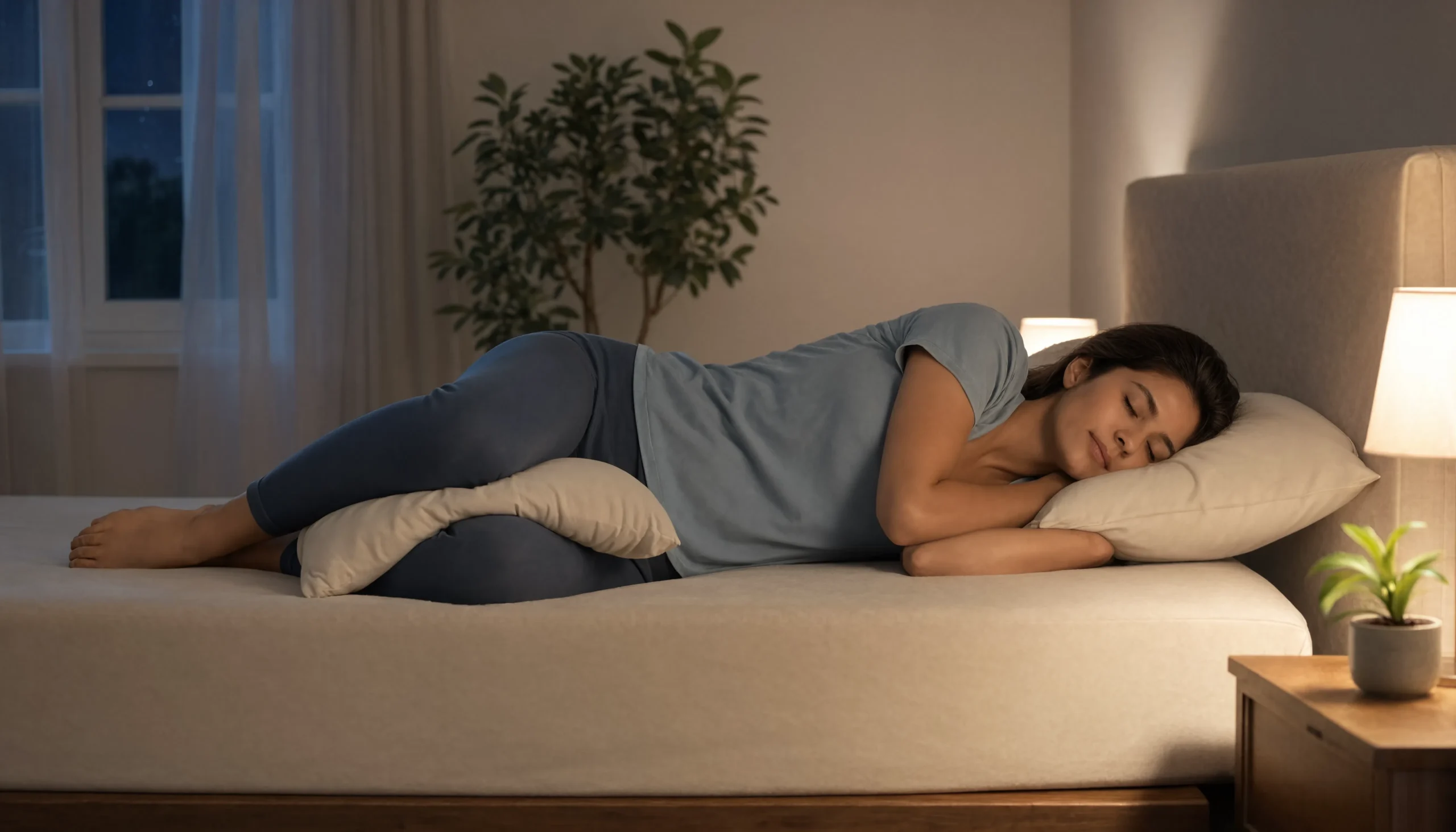
Sleep on Your Side with a Pillow Between Your Knees
Side sleeping is another excellent option.
Placing a firm pillow between your knees helps keep the hips, pelvis, and spine aligned, reducing twisting forces on the lower back.
For additional comfort:
- Bend the knees slightly.
- Keep the spine in a neutral position.
- Avoid curling into a tight fetal position.
Try the Fetal Position
Some people with herniated discs experience relief by sleeping in a gentle fetal position.
This position promotes a slight separation between the vertebrae, which can help alleviate pressure on compressed spinal nerves.
Avoid curling too tightly, as excessive bending may strain the hips and lower back.
Avoid Sleeping on Your Stomach
Sleeping on your stomach is generally discouraged for people with sciatica.
This position often:
- Increases lower back arching
- Twists the neck
- Places additional pressure on spinal joints
- Worsens nerve compression
If stomach sleeping is unavoidable, placing a pillow beneath the pelvis may help reduce strain.
Choosing the Right Mattress for Sciatica
A supportive mattress plays an important role in spinal health.
Most people with sciatica benefit from a medium-firm mattress that provides:
- Proper spinal alignment
- Even weight distribution
- Reduced pressure points
- Better lumbar support
An overly soft mattress may cause the spine to sink, while an excessively firm mattress may increase pressure on sensitive areas.
Choosing the Right Pillow
The right pillow supports proper neck and spinal alignment.
Recommendations include:
- Sleep on a pillow that maintains your head in line with your spine.
- Side sleepers should choose a thicker pillow.
- Back sleepers usually find the best support with a medium-loft pillow.
Proper pillow support reduces strain throughout the entire spine.
Nighttime Tips to Relieve Sciatica Pain
Improving sleep involves more than just changing your sleeping position.
Helpful habits include:
Stretch Before Bed
Gentle stretching may reduce muscle tightness around the hips, lower back, and hamstrings.
Common stretches include:
- Piriformis stretch
- Knee-to-chest stretch
- Hamstring stretch
- Pelvic tilts
Always perform stretches slowly and avoid movements that worsen pain.
Apply Heat Therapy
Using a heating pad before bedtime can relax tight muscles and improve blood circulation.
Heat therapy may reduce stiffness and make it easier to fall asleep.
Stay Physically Active
Although rest is important, prolonged inactivity can worsen sciatica.
Low-impact exercises such as walking or swimming help maintain flexibility and strengthen the muscles supporting the spine.
Maintain Good Sleeping Habits
Healthy sleep habits can improve both pain management and overall recovery.
Try to:
- Maintain a consistent bedtime.
- Avoid heavy meals before sleeping.
- Limit screen time before bed.
- Create a comfortable sleeping environment.
When Sciatica Requires Medical Attention
Mild sciatica often improves within several weeks with conservative treatment.
If you experience any of the following, consult a healthcare professional without delay:
- Severe or worsening pain
- Pain lasting longer than six weeks
- Weakness in the leg
- Persistent numbness
- Difficulty walking
- Loss of bladder or bowel control
- Pain following a major injury
These symptoms may indicate significant nerve compression requiring prompt medical evaluation.
How Is Sciatica Diagnosed?
Accurate diagnosis helps determine the underlying cause of sciatica.
Doctors typically perform:
Medical History
Reviewing symptoms, pain patterns, and previous medical conditions.
Physical Examination
Assessing:
- Muscle strength
- Reflexes
- Sensation
- Walking pattern
- Leg movement
Imaging Tests
Depending on symptoms, investigations may include:
- X-rays
- MRI scans
- CT scans
These tests help identify disc herniation, spinal stenosis, arthritis, or other structural abnormalities.
Treatment Options for Sciatica
Treatment varies depending on the cause and severity of symptoms.
Physical Therapy
Customized exercise programs help:
- Improve flexibility
- Strengthen core muscles
- Reduce nerve irritation
- Prevent future episodes
Medications
Doctors may prescribe:
- Anti-inflammatory medications
- Muscle relaxants
- Pain relievers
Epidural Steroid Injections
In cases of significant inflammation, targeted injections may reduce nerve irritation and provide temporary relief.
Surgical Treatment
If conservative treatments fail or severe nerve compression is present, surgery may be recommended to relieve pressure on the sciatic nerve.
Can Sciatica Be Prevented?
While not every case can be prevented, healthy lifestyle habits can lower the risk.
Recommendations include:
- Maintain proper posture.
- Exercise regularly.
- Strengthen your core muscles.
- Lift heavy objects correctly.
- Avoid prolonged sitting.
- Maintain a healthy body weight.
- Stretch regularly.
Taking care of your spine can reduce the likelihood of future sciatic nerve irritation.
Expert Sciatica Treatment at Garden PMR Hospital
Garden PMR Hospital offers comprehensive diagnosis and treatment for sciatica, lower back pain, nerve-related conditions, and spinal disorders. The orthopedic team conducts an in-depth clinical examination and, if required, uses advanced diagnostic tools like digital X-rays and MRI scans to identify conditions such as herniated discs, spinal stenosis, degenerative disc disease, spondylolisthesis, and other factors contributing to sciatic nerve compression.
Depending on the severity of the condition, treatment may include medications, physiotherapy, guided rehabilitation exercises, posture correction, pain management procedures, or surgical intervention when conservative treatments are no longer effective.
In addition to relieving pain, Garden PMR Hospital emphasizes long-term spine health by educating patients on proper body mechanics, ergonomic practices, safe lifting techniques, exercise routines, and practical strategies, including guidance on how to sleep with sciatica, to reduce pressure on the sciatic nerve and minimize the risk of future flare-ups.
No matter whether your sciatica is linked to a slipped disc, spinal arthritis, piriformis syndrome, or another underlying spinal condition, the hospital delivers personalized care with skilled orthopedic experts, modern diagnostic technology, and evidence-based treatments that help relieve pain, restore movement, improve sleep, and encourage long-term healing.
Conclusion
Finding how to sleep with sciatica often begins with improving spinal alignment and reducing pressure on the sciatic nerve. Sleeping on your back with a pillow under your knees or on your side with a pillow between your legs can significantly improve comfort for many people. Combining proper sleep posture with gentle stretching, supportive bedding, and healthy daily habits can make a noticeable difference in pain relief.
However, persistent or worsening sciatica should never be ignored. Seeking timely medical evaluation can help identify the underlying cause, provide appropriate treatment, and reduce the risk of chronic nerve damage. With the right approach, most people can effectively manage sciatica and enjoy better sleep and improved quality of life.
FAQs
Sleeping on your back with a pillow under your knees or on your side with a pillow between your knees helps maintain proper spinal alignment and reduce pressure on the sciatic nerve.
Sleeping on your stomach may increase stress on the lower back and sciatic nerve, often worsening symptoms.
Yes. A supportive medium-firm mattress helps maintain spinal alignment and may reduce pressure on the lower back and sciatic nerve.
Reduced movement, prolonged pressure on the affected nerve, muscle tightness, and poor sleeping positions can make sciatica feel worse during the night.
Yes. For back sleepers, placing a pillow under the knees helps maintain the natural curve of the spine and reduces stress on the lower back.
Gentle stretching may reduce muscle tightness and improve flexibility, helping some people sleep more comfortably.
You should seek medical attention if pain is severe, lasts longer than six weeks, causes leg weakness or numbness, or is associated with bladder or bowel problems.
Yes. Most cases improve with conservative treatments such as physical therapy, medications, exercise, and lifestyle modifications. Surgery is typically considered only when symptoms are severe or do not improve with non-surgical treatment.